
dianeisms
Jack Kerouac’s On The Road is my favorite book. If you read it and don't get it, you'll never understand me.
My mouth can hold exactly 3.25 Peeps. Do not ask me how I know this.
I love poetry and am fascinated by words.
If I had my choice, I’d teach creative writing to college students.
I’m an incurable insomniac.
I enjoy intelligent discussions on almost any topic. At times, I enjoy stupid conversations even more.
I like to think I’m eternally patient with children and the elderly. My family would probably disagree.
I don’t have a middle name.
I think Caro Mio Ben is the total of all that's grand and wonderful about music, distilled down into three minutes of sheer perfection.
I’m completely mesmerized by precision craftsmanship. I can stare at the clockwork of a Breguet or Audemars Piguet for hours.
I get teary every time I hear Nessum Dorma. Every. Time.
I’m a list maker. I have lists everywhere and for everything. (This list, for instance? Yeah, it was on a list.)
I’m a gadget freak.
The most attractive aspect of a person to me is their level of compassion.
Give me a good book and you won’t see me for hours.
I’ve been told that my best attribute is my commitment to Jesus.
The best compliment I ever received was, “In every single way, you’ve made my life better.”
I think a lot of truth is said in jest.
I don’t like it when people tell me what to do.
I don’t understand how there can be such a thing as a galactic constant.
I love being in a crowd. The more people the better. I attribute this to having grown up in a large family.
I look at people too much. Someone charitably described this as looking at people like an artist — except when I watch them, I’m not thinking about how I could draw them, I’m describing them. Usually. Sometimes I’m simply enjoying the sight of them.
If I see an Elvis or Godzilla movie on television, I have to watch it. Have to.
I can’t sing. At all. It doesn’t stop me.
Winter is my favorite season.
Pancakes are my favorite breakfast food, followed closely by Capt’n Crunch cereal.
I always keep a small amount of bubble wrap on my desk where I write. I pop a row or two whenever I'm in deep thought.
I believe in miracles.

i couldn’t be
It's always amazing to me how the minds of children work.
After spending yesterday at the zoo, my friend’s grandson Aras has become quite interested in all things creepy-crawly. Spiders. Snakes. Ticks. Scorpions. Centipedes. You name it — if it's sure to make you feel itchy and it'll freak out the girls, color him curious.
As a result, I wasn't at all surprised when he had his grandmother FaceTime me last night so that he could show me several books about animals and insects that he'd purchased before leaving the zoo.
Fast-forward to this morning. Smack-dab in the middle of another FaceTime call to continue our spider discussion, he paused on the subject long enough to pose a question: "What if days started with different letters?"
He then proceeded to ramble off the following: Ariday, Briday, Criday, Driday, Eriday, Friday (“Nevermind. It’s already taken.”), Griday, Hriday, Iriday, Jriday, Kriday, Lriday, Mriday, Nriday, Oriday, Priday, Qriday, Rriday, Sriday, Triday, Uriday, Vriday, Wriday, Xriday, Yriday, and Zriday.
Ahh, the wonder of being a child.
Eager to end my tour into arachnophobia, I explained that sadly, only Ariday (day of little or no rain), Driday (yet another day of little or no rain), and Triday (day of fulfilling your potential) made sense. My always-spot-on-for-a-five-year-old logic was evidently convincing enough that he abandoned that method of thought and went back to reading his books.
Later, over a stack of pancakes, they called once again with yet another question. Always the inquisitive one, he asked, "You like to write books and look at things, but what couldn’t you be?
"Yes," his grandmother chimed in, "what couldn't you be?"
What couldn't I be??
[This is the moment where you picture me looking up from the computer, into the sky, and the image becomes all wavy and dreamlike as I imagine exactly what I couldn't do.]
I then explained that I couldn’t be a lot of things.
I couldn’t be your money launderer. Or your launderer for that matter. Any kind of laundering, I'm not doing. If it requires soap or detergent or some sort of Snuggle fabric softener or involves the depositing of money into one account in preparation of spending it from another account in preparation of buying corn meal that I can then sell on the corn meal black market in an attempt to make dirty money clean again — I have to decline. There’s no way I could do this. No way, no how.
I couldn’t be your hand-latched lifter-upper. No matter what’s in that tree or over that wall or up in the attic, there’s something I just can't deal with when you ask me to latch both hands together so I can form a human step for your dirty shoe. Use a step ladder. Someone else’s back. Find a small child. But I can’t support the use of my hands for your feet. Nope, can’t do it.
I couldn’t be your new recipe guinea pig. No matter how well you think you follow the recipe and no matter how perfect it looks, I can’t be the girl who takes the first taste. Because even if the first taste is really good, no matter what I say I'm in for a world of pain. Did I like it? Not like it enough? Did I not smile when I tasted it? Did I not sniff in the aroma and make a pleasant-looking facial expression? Did I not roll it around in my mouth long enough to taste the whole experience of your brand-new hobby? I refuse. I cannot. No sir.
I couldn’t be your high-five buddy. Nuh-uh. Although I’m fully in support of you finishing your beer, tripping a kid on the sidewalk, eating a bag of Cheetos in one big bite, or burping the alphabet — I cannot give you the hi-five. It's from a day that has passed us by, dear friend, and no matter how cool the slapping sound can be, I cannot bring myself to raise my arm in celebration of all things food, bullying, and Cheetos.
These are just some of the things I believe I couldn’t be.
I couldn’t be your backscratcher or your flat tire fixer. I couldn’t be your back waxer or your dog groomer. I couldn’t be your racquetball buddy or your workout spotter. I couldn’t be your haircutter or your neck trimmer. I couldn’t be your comic sidekick, the creator of your theme music, the gal who says nothing even though you stink, your “please watch my vacation video” buddy, your shot-giver, your furniture mover, your cookie-snatcher, your floor-sweeper, or your friend who enjoys hearing you read your poetry.
There are some things that you'd probably not want me to be anyway.
I couldn’t be your food chewer, your backseat driver, your fruit juicer, your lazy trainer, your “bad with numbers” accountant, your “the man is the King of the Castle” marriage counselor, your hockey coach or your live-in, out of work, unemployed pool girl.
Sure, there are more things that I couldn’t be.
But with the world the way it is, and the lack of motivation already hovering above society like an evil that cannot be defeated — is it really worth telling you about how I can't do this and I can't do that? Is it really worth denying myself potential chapters in my life just because a question was asked over a mound of pancakes?
I think not.

big head
During my last year living in Cambridge, a friend’s daughter Jenna did a project at school that involved a life-size cut-out of Steve Buscemi’s head on a stick. I’ve no idea what the school project was about, but when the first semester was over and the extended holiday break began, she brought Steve with her.
Not surprisingly, it was she who decided it would be appropriate to make Steve part of the friend family … an extra, if you will. Given Jenna’s compassionate nature, I can easily see her understandable soft spot for actors who’ve been cut up and pasted onto cardboard.
So there was a scene that happened about twelve times a day. Someone was busy doing three things at once … running after pets, talking on the telephone, and making a cup of coffee, for instance … and then suddenly s/he turns, and Steve is staring at him/her.
So s/he jumps and screams and is startled. And everyone else laughs.
“What’s Steve Buscemi doing in the cupboard? Get him out of there!”
And then that person was relegated to finding an appropriate hiding place to scare the crap out of the next person.
Our friend Bernice, whom we all tried unsuccessfully to startle, would never take the bait. She’d chide us by saying, “Do you really think that Steve would be in our cupboard or the refrigerator or in the shower?”
She was right, of course. There was no logical reason why we should scream when we’d see Steve Buscemi staring at us from the bathroom mirror or the edge of the bookcase or from inside the fireplace.
There was no reason, but it still happened. A lot.
My point to this post was going to be something about an article I’d read regarding politics and education. About how, when it comes right down to it, playing with cut-outs of Steve Buscemi’s head is far more valuable than learning how to take standardized tests. Because playing with Steve teaches important lessons about reality, which clearly cannot be learned by filling in little bubbles with a number two pencil. And about how doing well on standardized tests is a useless skill that becomes obsolete as soon as you leave school; I mean, it’s not even a fun party skill. Fun party skills involve such things as knowing how to light a match from a matchbook with only one hand, and I’m pretty sure that’s not on the new standardized test.
But I lost the thread of argument before it even started when I opened a package and saw Steve Buscemi’s head bubble-wrapped inside the box.
Yup … Steve struck again, compliments of Jenna. An attached note revealed that she came across him in a box tucked safely in her attic while she was packing up her eldest daughter for college. How lucky am I to have friends considerate enough to send a big head across state lines?
Nice move, J.
So I’ll end this with gratitude for the educational value of friends. Thank goodness I’ve people to teach me things. As Bernice once so patiently explained, Steve Buscemi won’t fit into the refrigerator.
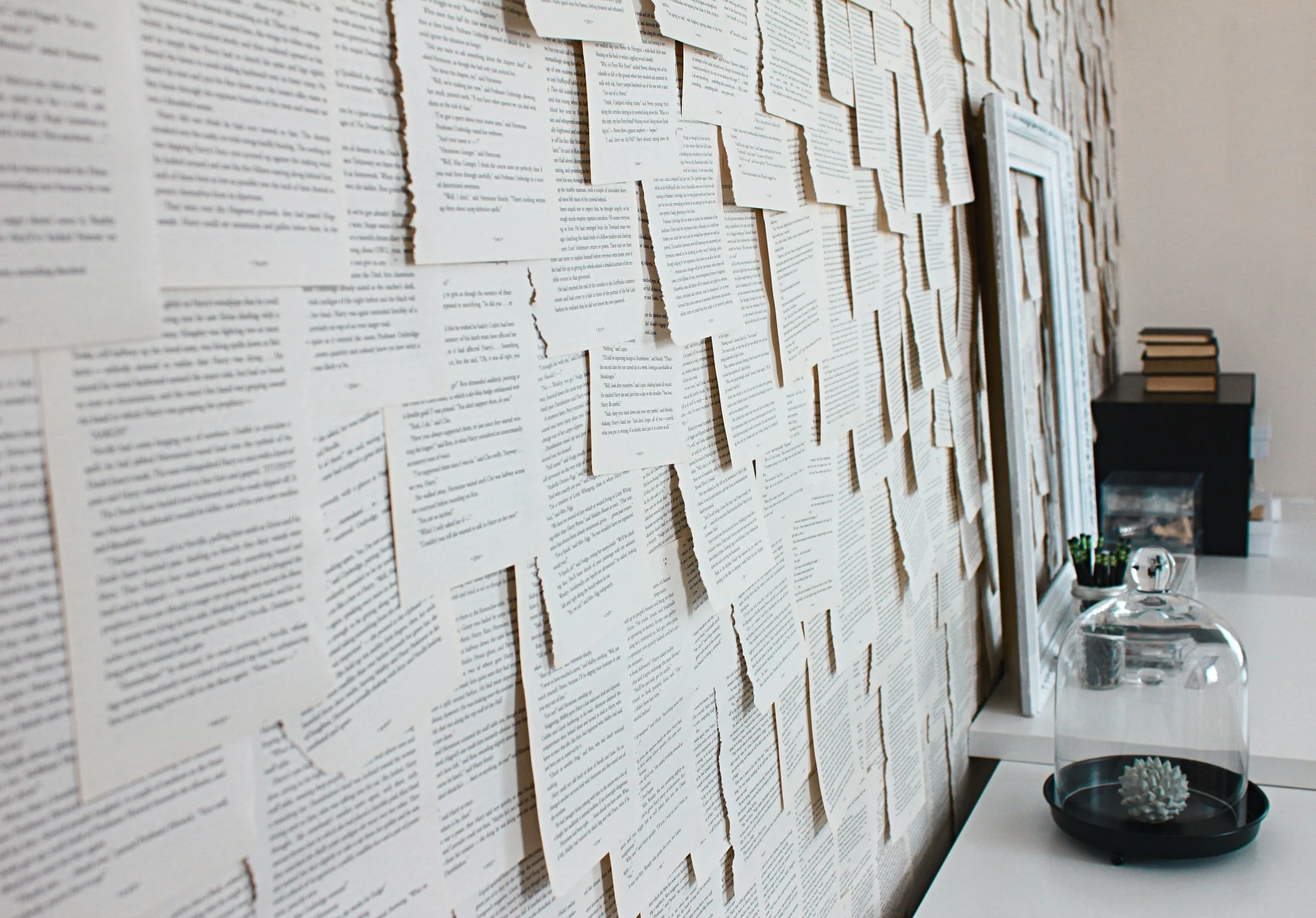
sight unseen
… I believe electronic books are akin to desecrating the flag.
About a month ago, I received a call from a friend in Canada. He’d just returned from Haiti after serving a two-year stint in the Peace Corps, and he wanted to share something with me.
The people there, he said, are suspicious of folks with disabilities, and he encouraged me to be extra careful while on an upcoming trip. “There’s something especially troubling to Haitians about the blind,” he said, “so please take good care.”
Huh. The Haitians are blindists. Who knew?
As for the wish to be safe and take care, I assured him that it wouldn’t be a problem. First of all, I was going to Ohio, not Haiti. Secondly, even if I had chosen the Caribbean over the Midwest, it’s not like I’d have swung my stick at ‘em like piñatas. Contrary to what some believe, being visually impaired hasn’t made me a complete nitwit.
I spent the remainder of the day packing my travel essentials (Bible, iPads, journal, favorite pens and pencils, Kerouac, and several pairs of glasses and sunglasses), and neatly organizing my bag.
Only one person questioned my selections. Cole, Jayne’s latest new boyfriend, seemed confused as to why I just didn’t download a digital copy of the books onto a device.
“If you have to ask, you’ll not understand,” I said, “but I believe electronic books are akin to desecrating the flag.” I then shot a disapproving look in what I believed was Jayne’s general direction and quickly dismissed him. I can’t be bothered with dolts who don’t appreciate the community of the written word — an arrogance defined many years ago by a dear friend named Jacob, and bestowed upon me by the man himself.
Jacob loved words and books, and he lived his life in their immediate presence. Indeed, his life and the element of language in which he lived were indivisible. I cannot imagine his existence — a man made of flesh and blood, a man who walked in the sunlit streets of Europe, chatted with friends, ate good food and drank good wine, who slept and dreamed in the light of the moon — unless I remember as well the language in which he placed these things. His presence in my life taught me to understand that our human experience, however intense it may be, is truly valid only in proportion to its expression in words.
Expression is a word and a concept in which he had complete faith. He believed that poetry was expression and that it was founded upon aesthetics. Consequently, in our time and place, we’re distracted by the notion of communication, which is perhaps inferior to expression. I believe Jacob thought so, anyway.
I say all that to say just this: while I’m legally blind, words nonetheless allow me to see farther into the world than most sighted people. Little by little, I’ve come to realize the strange irony of events in the past few years. While others often think of Paradise as a garden or a palace, I’ve come to imagine it as a kind of library, with me at the center of billions of words in thousands of languages.
That’s Paradise. On Earth, however, I’m unable to make out the title pages and the spines without the aid of technology. In the early stages of my impairment, I felt anger at my God who granted me books and blindness at one touch. Now I feel neither self-pity nor reproach, as I’m compelled to make it the cornerstone and definition of my being. In doing so, I’m reminded of Homer, also blind, who made as much of a balance between oral tradition and the history of the Trojan wars.
As important as books are (and as important as writing is), there’s yet another, a fourth dimension of language that’s just as important and that’s older and more nearly universal than writing. This other side of the miracle of language is the oral tradition, which encompasses the telling of stories, the recitation of epic poems, the singing of songs, the making of prayers, the chanting of magic and mystery, the exertion of the human voice upon the unknown — in short, the spoken word.
In the history of the world, nothing’s been more powerful than the ancient and irresistible tradition of vox humana. This tradition is especially and above all the seat of the imagination, and the imagination is a kind of divine blindness in which we see not with our eyes, but with our minds and souls … in which we dream the world and our being in it.
My friend’s stories of his service in the Peace Corps have proven to be a voyage of faith for me in more ways than one. Not only are each of us able to serve as the hands and feet of Jesus as we build His communities and spread the joy of His gift of salvation, but I’m living proof to the infirm that we’re defined not by our inabilities, but by our promise to look onward and, most importantly, upward.
Our resolute belief that we can do all things through Christ who strengthens us, diminishes our imperfections, and harnesses His love for us like a mighty beacon of light for all to see and behold.
With that, is it any wonder that I’ve found all color and brilliance in words and languages, spoken or felt, through His grace?

like it is
That winter, as I lay on my new rug pressed on the floor, songs of love and despair leaked out of the pipes and sighed from the air shaft: Nessun dorma. Recondita armonia. The ancient building’s steam heaters hissed, its hidden pipes groaned, and its joints cracked late at night. I huddled under blankets to keep out the midwestern cold that layered the floor, turned on my stereo, played the guitar, and listened to shouts from the street and the booted feet of neighbors returning from late parties or afternoon shifts. The arias darted out like mice in the silences: Di’ tu se fidele! Un bacio, un bacio ancora, un altro bacio!
I met the singer one afternoon in the laundry room while trying to fold a fitted sheet. A student at the local university, Oliver was planning to attend law school when he graduated, as he’d promised his parents, though he admitted that he continued voice lessons and confessed to the dream of becoming an operatic tenor. The residents in the units on either side of his reported that they could scarcely hear, so he practiced in his room. He didn’t know about the secret hollows in the old building’s entrails that funneled his voice past their apartments straight to mine.
Oliver was a big man with a round, self-deprecating face and a soft speaking voice that bore no resemblance to the strong, sweet, buttery tenor that surged through the pipes. In the laundry room, we spoke across a friendly distance about the personalities of the washing machines and the strange prejudices of the bill changer. I kept the secret of my front-pipe seats to myself.
With practice, I could identify each aria in the thicket of car horns, rock anthems, and shouts that thrust through the doors, walls, and windows. At Oliver’s first note, I’d head to the window on the airshaft and crank it open. His voice pushed upwards, dislodging paint flakes and the soot of many winters. Una furtiva lagrima. La rivedra nell’estasi. La dona e mobile. I’d even been known to stand inside the shower. The pipe that led to the shower wasn’t to be relied on in delivering hot water, but it delivered that tenor voice with precision. Amici in vita e in morte.
I often pretended to sing along, with operatic gestures. I clowned because I was reminded of the pressures that accompanied parental promises and because we’d make popcorn in the miraculously-unchoked fireplace of the hundred-year-old building, with butter kept overnight on the window sill. It didn’t matter if the butter came powdered with an early morning layer of snow and soot. Everything was an in-joke during that first year. Vesti la giubba: Ridi Pagliaccio!
The next few years fan out like pictures that I discover in a drawer and can’t quite summon the energy to paste into a photo album: Gia and me lying on the sofas, watching Greta Garbo on the 2am movie; our floors carpeted with friends rolled in sleeping bags; Shea avoiding the camera’s eye across a room filled with men in suits and women in cocktail dresses; Bobby at the end of a long lecture hall, his head emerging from a podium and a pile of papers; Matt pushing his girlfriend on a swing.
Addio, senza rencor; addio, o dolce svegliare!
Then quite by accident, one day I glanced down at an opera review and Oliver’s name leaped up. He was singing tenor in a touring production of an American opera company; it was a good review. I searched for him and fished out a dozen other references. One interviewer reported that Oliver had gone to law school and worked as a lawyer for a few years, singing on nights and weekends; finally, he’d gathered his courage and his savings and joined a small troupe. Then he had a series of increasingly important parts in bigger theaters. Now, this role and a national tour.
The chilly room, the smell of burnt popcorn and snow, and the sound of a tenor voice climbing through the pipes broke into my mind, battering down the years between. E lucevan le stelle! I called Matt to tell him that Oliver had escaped being a lawyer and was making it in opera after all.
“It’s too bad we can’t call Gia,” he said. “She’s the one who would truly appreciate how ironic, how right, this news is.”
With a lurch of the heart — T’amo, si, t’amo, e in lagrime — I remembered that Gia was the one person we couldn’t call; she passed a few months earlier after a grueling five-year battle with malignant modular melanoma. A blister of tears swelled behind my eyes. One drop broke out, found a path out of my left eye, and tickled the side of my cheek.
I’ve had a lifelong love affair with opera, and at that moment I suddenly realized why: only opera tells life like it really is.